
School Management App
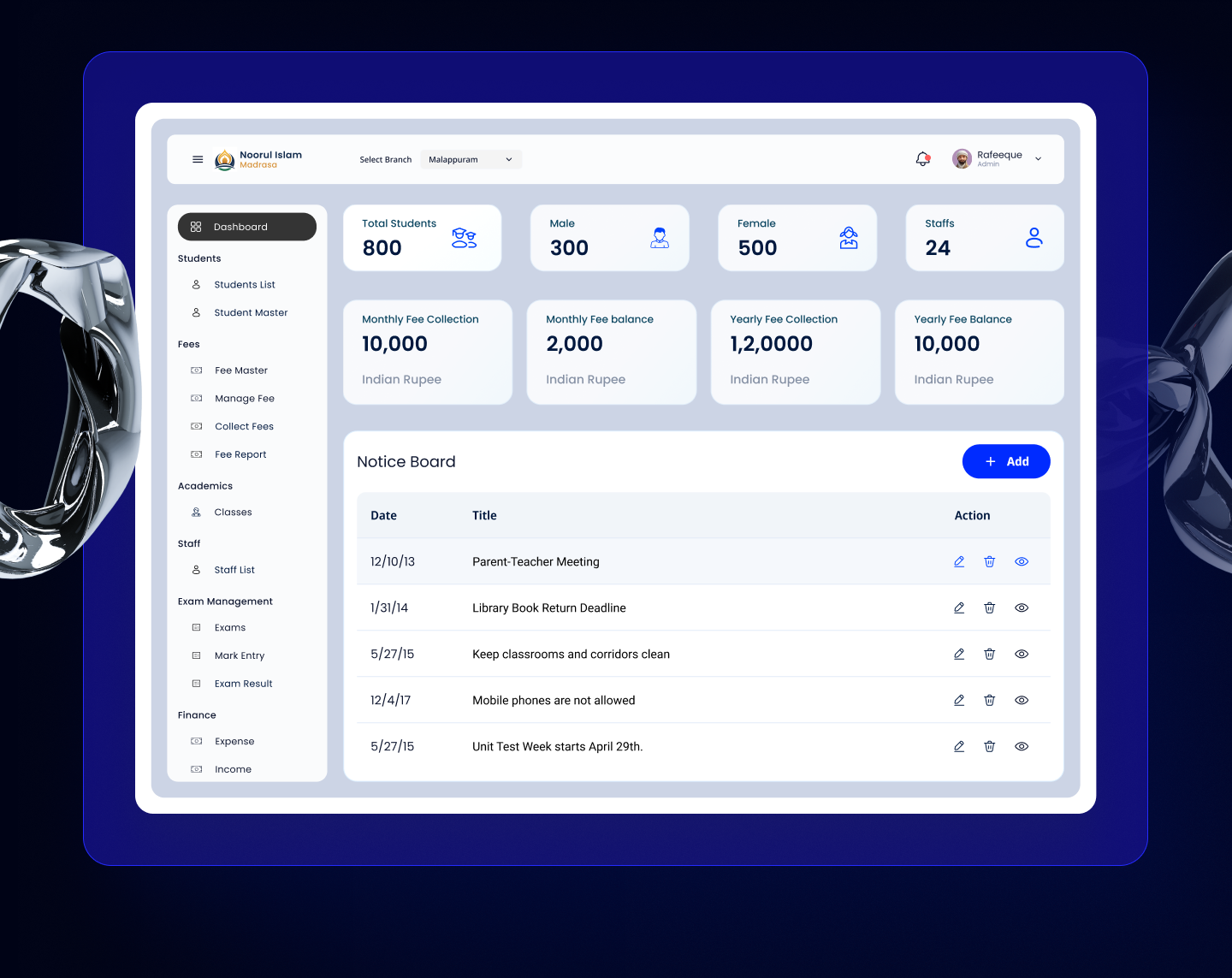
Overview
What is it?
A School Management App designed to simplify administrative work and streamline daily school operations connecting administrators, teachers, staff, and students on one unified platform.
Current Scenario
Many small schools still rely on manual registers, spreadsheets, and paper-based processes to manage students, staff, exams, and finances.
Project Goal
Reduce paperwork, automate routine tasks, and improve operational efficiency by digitizing workflows such as class management, exams, and fee collection.
My Role & Responsibilities
As a UI/UX Product Designer, I handled the end-to-end product design lifecycle.
- End-to-end product design
- User research & competitor analysis
- Vibe coding using Figma Make and usability testing
- High-fidelity UI design
- Creating and maintaining the design system
- Working with developers for design integration
- Conducting usability testing and iterations
The Problem
Many small schools still rely on manual processes such as paper registers for attendance, exam marks, fee collection, and student records. These methods are time-consuming, prone to errors, and difficult to manage.
Manual Processes
Significant reliance on paper registers, leading to errors and inefficiency.
Scattered Data
Information is stored in multiple places, making it hard to track data, generate reports, and monitor student performance.
Need for Digitalization
Schools need a simplified digital platform to streamline operations and improve accuracy.
Research & Insights
To better understand the challenges faced by school administrators and teachers, I conducted stakeholder discussions and product research focusing on small and mid-size schools. The goal was to understand current managing workflows and identify pain points.
1. Administrative tasks are difficult to manage
Administrators handle student records, exams, fee collection, and reports. Without a centralized system, these tasks become extremely complicated.
2. Paper-based workflows are time-consuming
Using paper registers and spreadsheets for recording attendance and finances increases the chances of errors and takes significant time.
3. Lack of centralized data
Information about students, staff, and finances is scattered across different places, making data retrieval and analysis difficult.
4. Limited accessibility
Teachers and staff cannot efficiently access school data outside the office, hindering quick decision-making and collaboration.
Design Goals
The main objective was to create a mobile-friendly web application tailored for small schools. The platform simplifies key administrative workflows while maintaining an intuitive and easy-to-learn interface.
Core Modules:
- Student and Class Management
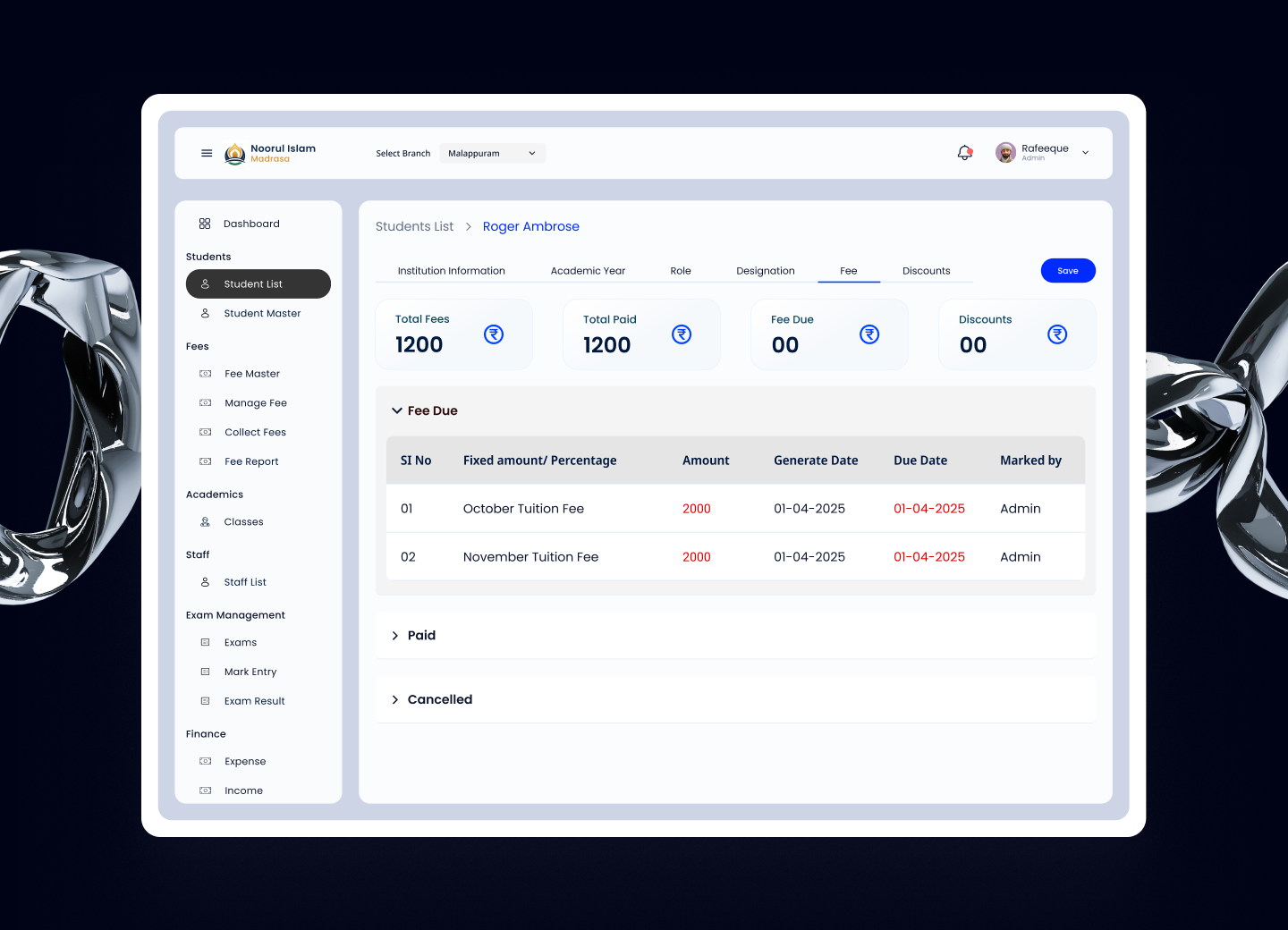
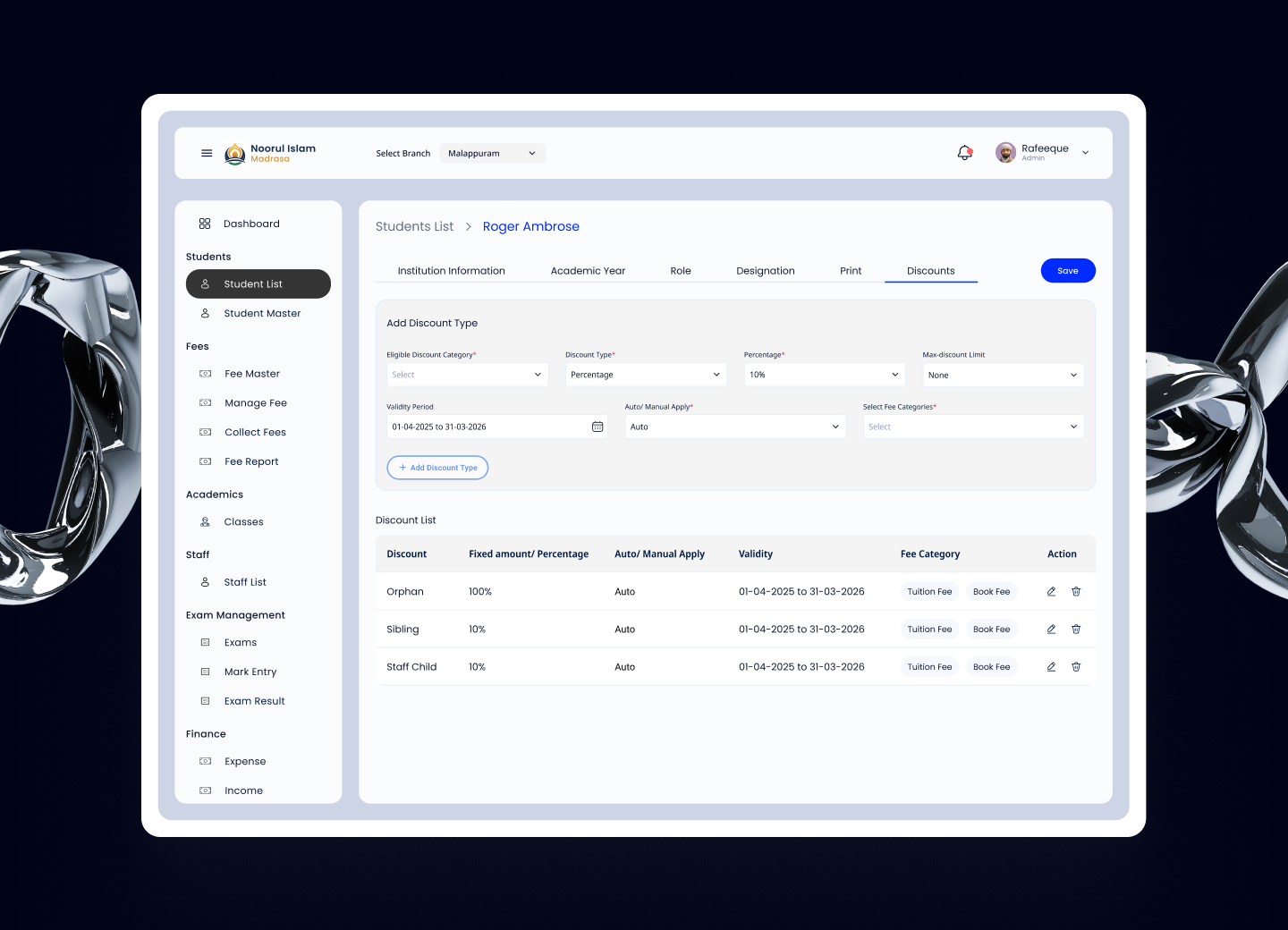
- Fee and Finance Management
- Exam and Report Management
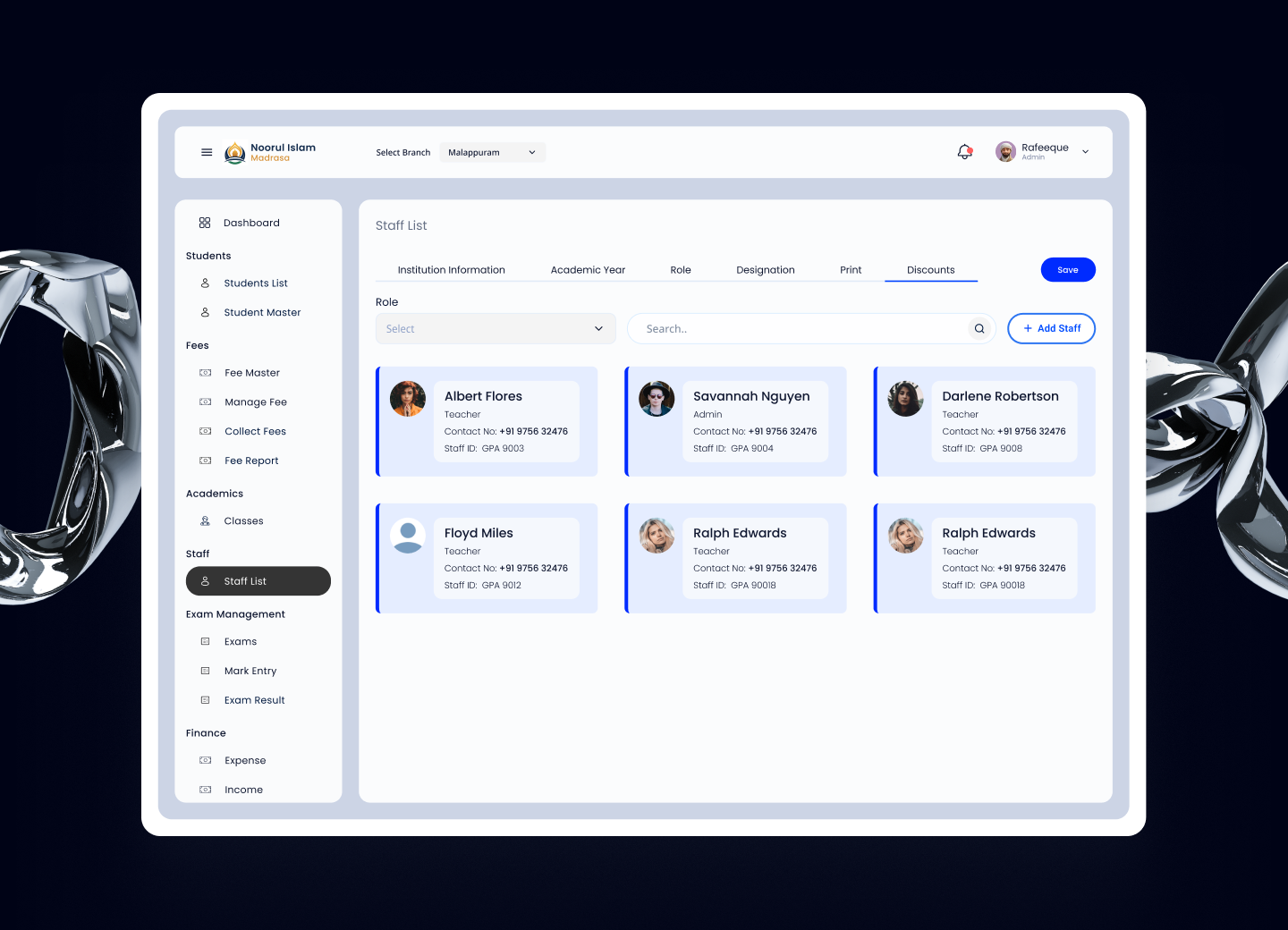
- Staff Management
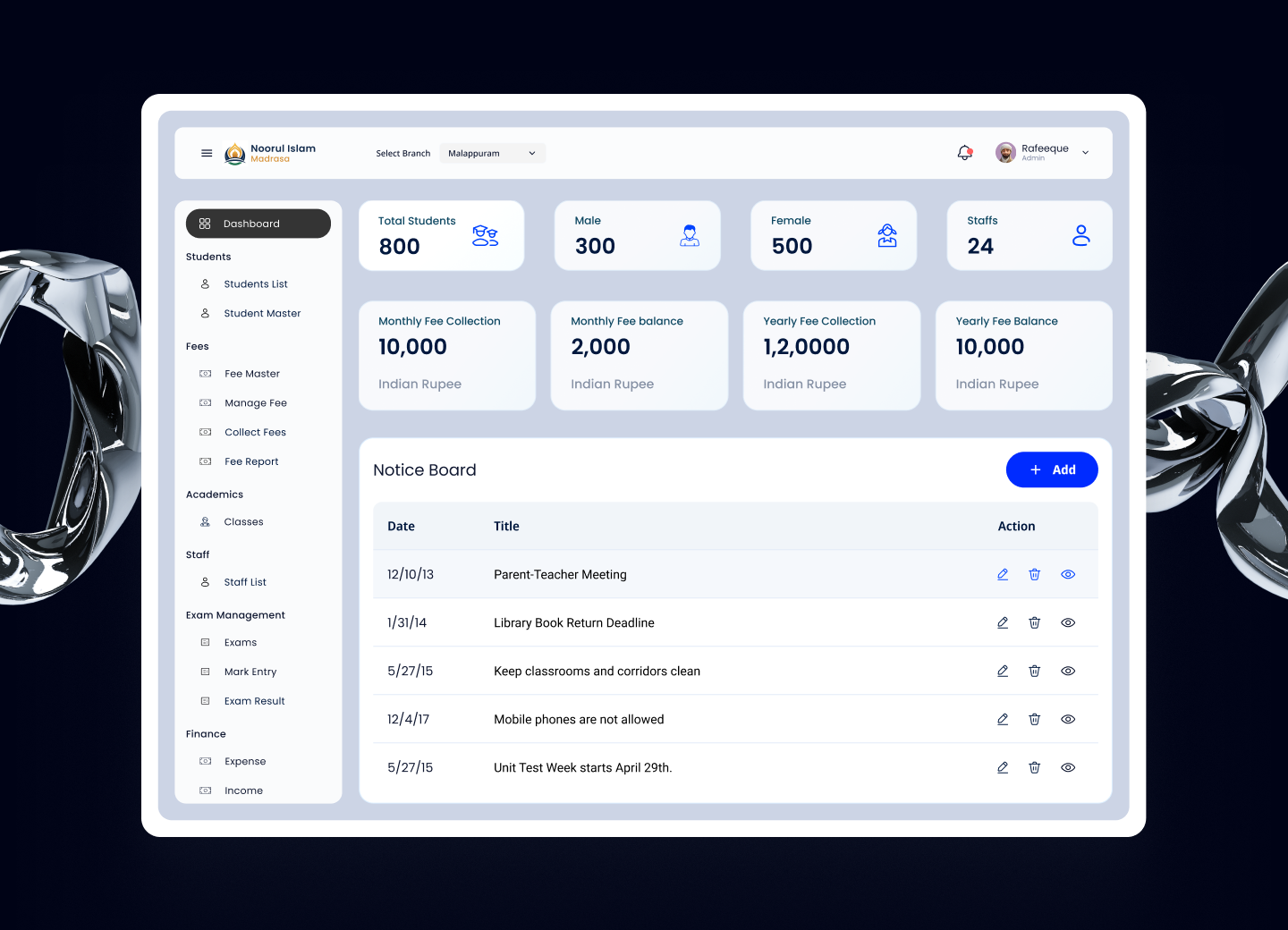
- Dashboard with key school insights
The goal was to ensure that even users with minimal technical knowledge could easily operate the system.
Design Process
Discover
Stakeholder interviews & Understanding stakeholder Expectations, Competitive analysis.
Define
Business Goals, User persona, User flow, Identify Key features using the Moscow method
Ideate
Explore multiple design solutions, Collaborate with developers and stakeholders
Prototype/ Test
Interaction design, Prototyping, Usability testing
Design
High-fidelity UI design, Scalable design system, Developer handoff and iterate
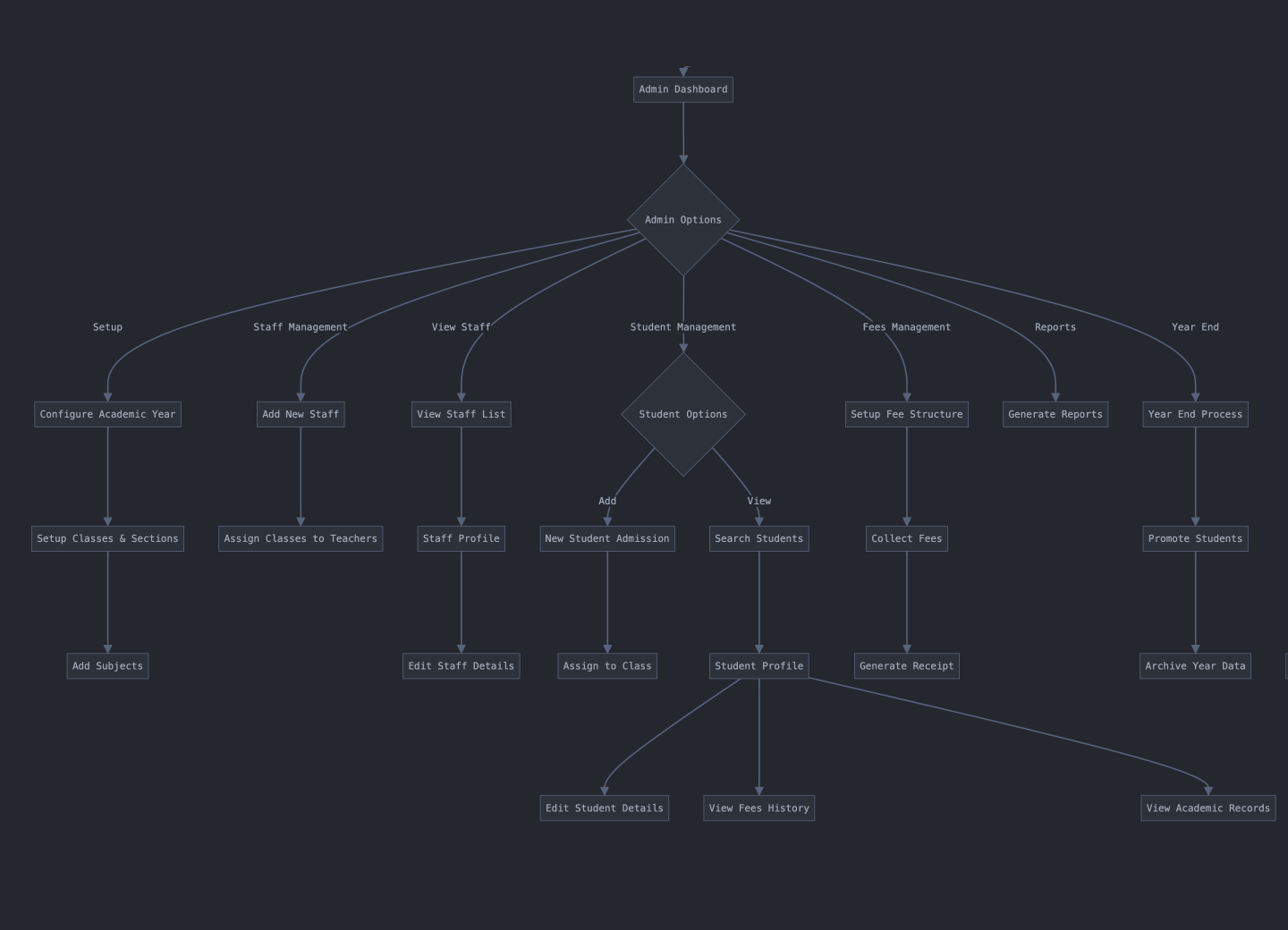
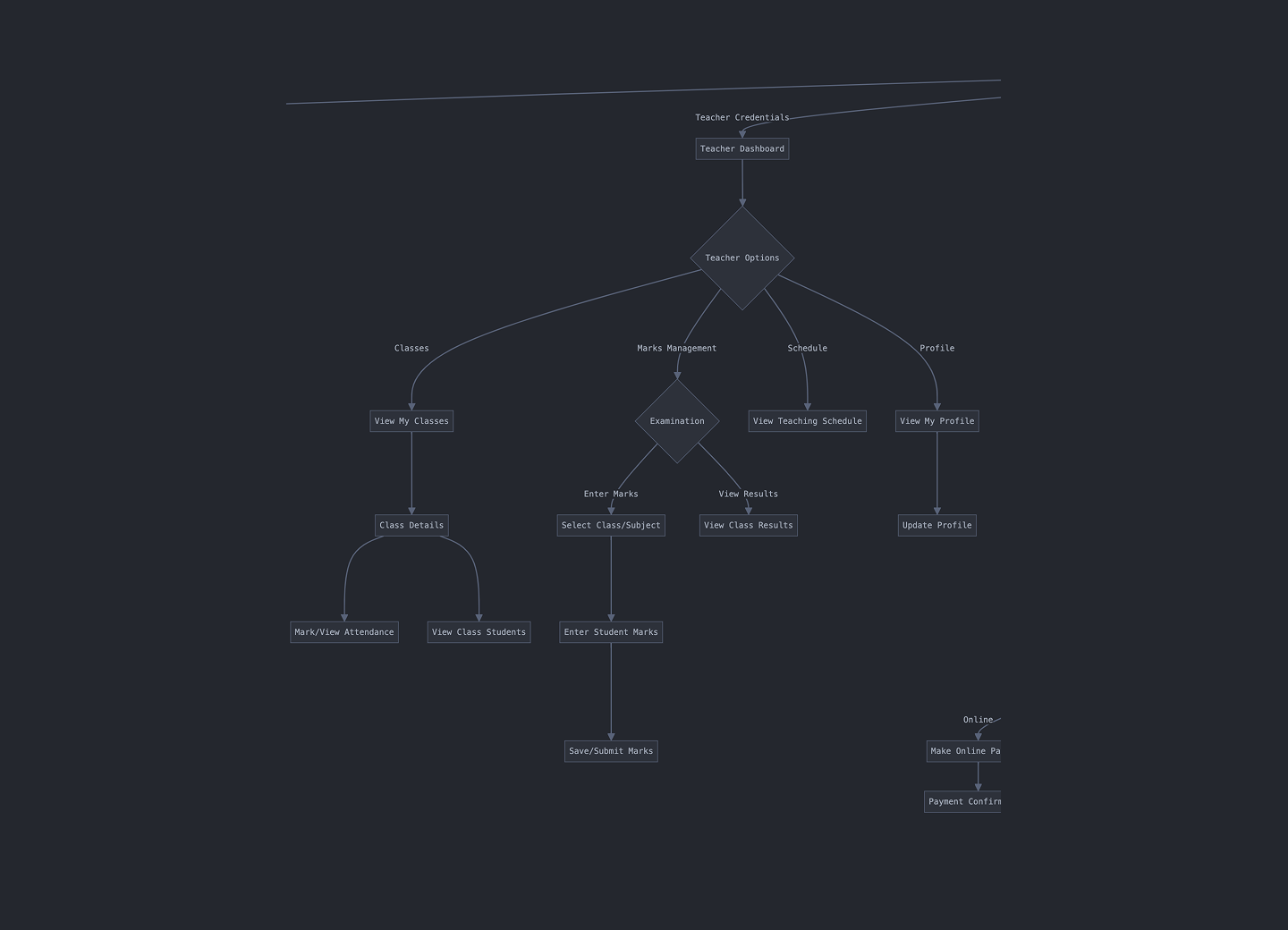
Information Architecture
Here is a look at the information architecture established for the product.
Final Product Screens
Impact & Results
The implementation of the School Management App significantly improved operational efficiency for small schools.